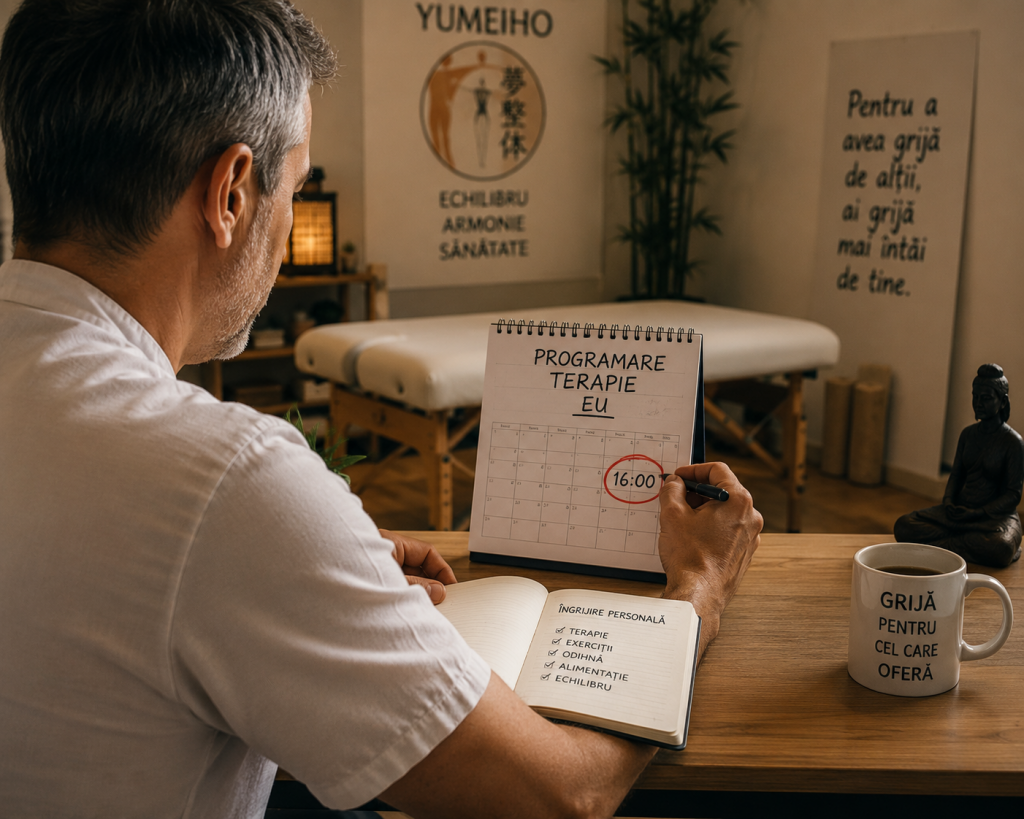
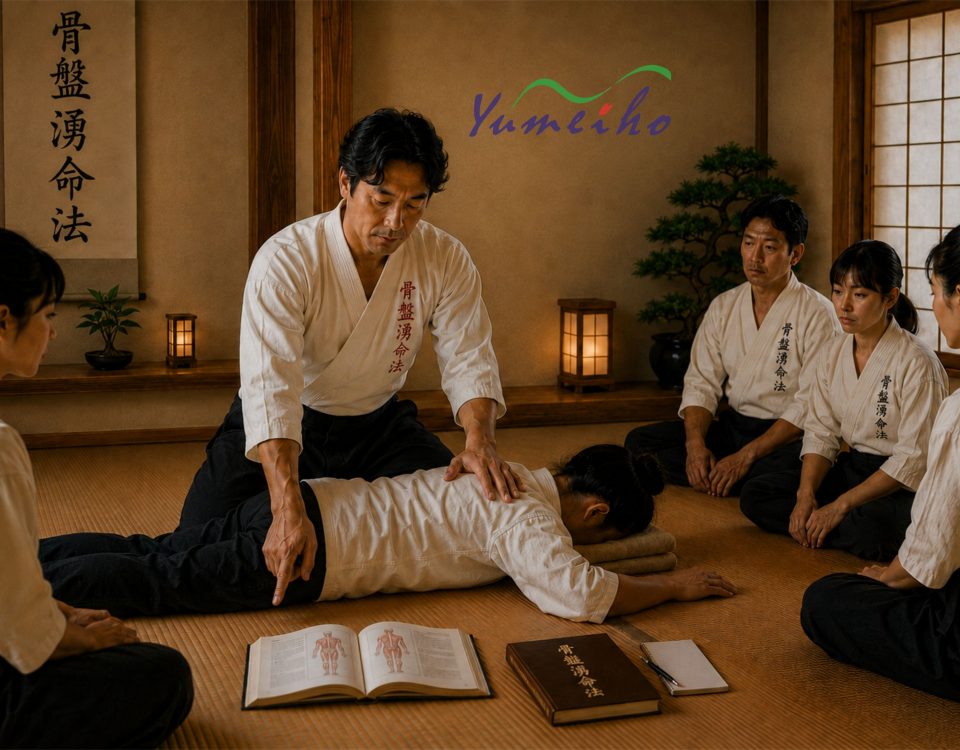
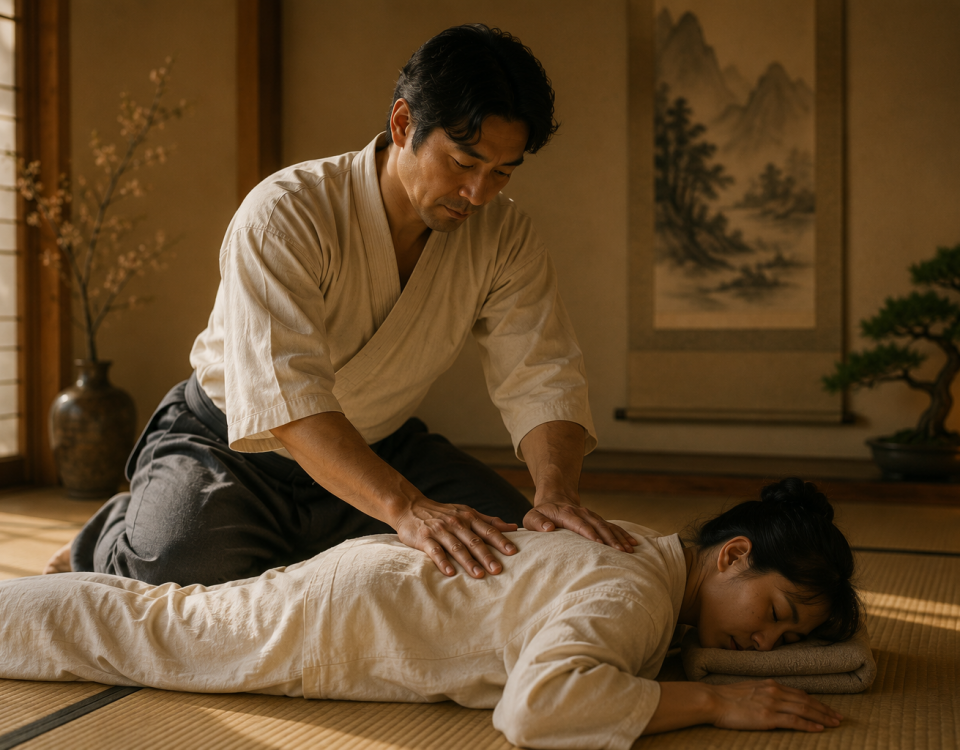
In discussions about therapy, we often talk about techniques, patients, outcomes, courses, and professional development. We analyze what we can do better for those who come to us and how we can become more effective therapists. Much less often do we talk about the person who provides the therapy: the therapist.
There is a situation that occurs more often than we might be inclined to believe. The therapist who finds time for everyone else but no longer finds time for themselves. At first glance, the explanation seems simple. The schedule is full, there are many patients, courses, travel, administrative duties, family, and everyday responsibilities. Yet, if we look more closely, we realize that time does not simply disappear. It is merely allocated according to priorities.
Very often, the therapist ends up being last on their own list. They receive therapy less and less frequently, postpone the exercises they recommend to others, give up physical activity, stop attending practice sessions, and ignore their own pain or the signals their body is sending them. They continue working, hoping that one day they will find the right moment to take care of themselves as well. The problem is that this moment rarely comes on its own.
Psychology offers several interesting explanations for this phenomenon. After years of practice, the role of helping others becomes part of one’s identity. The therapist begins to define themselves by what they give to others and comes to feel useful, valuable, and fulfilled when helping. Almost imperceptibly, the needs of others occupy more and more space, while the therapist’s own needs are pushed into the background. A thought begins to emerge: “My patient needs me now. I can wait.”
This may be accompanied by a strong sense of responsibility for the well-being of others. Some therapists feel guilty when they decline appointments, take a vacation, or set aside time for their own recovery. At other times, the line between altruism and self-sacrifice becomes blurred. Helping others is admirable. Constantly neglecting yourself in order to help others is something entirely different.
There are also therapists who tell themselves they will take care of themselves once the busy period is over. After the next course. After the next group of patients. After the next project. The problem is that the busy period never seems to end. In other cases, there is an illusion of invulnerability. We work with the human body every day, we talk about posture, biomechanics, rehabilitation, and prevention, but knowing is not the same as applying. Many professionals give their patients excellent advice that they themselves do not follow.
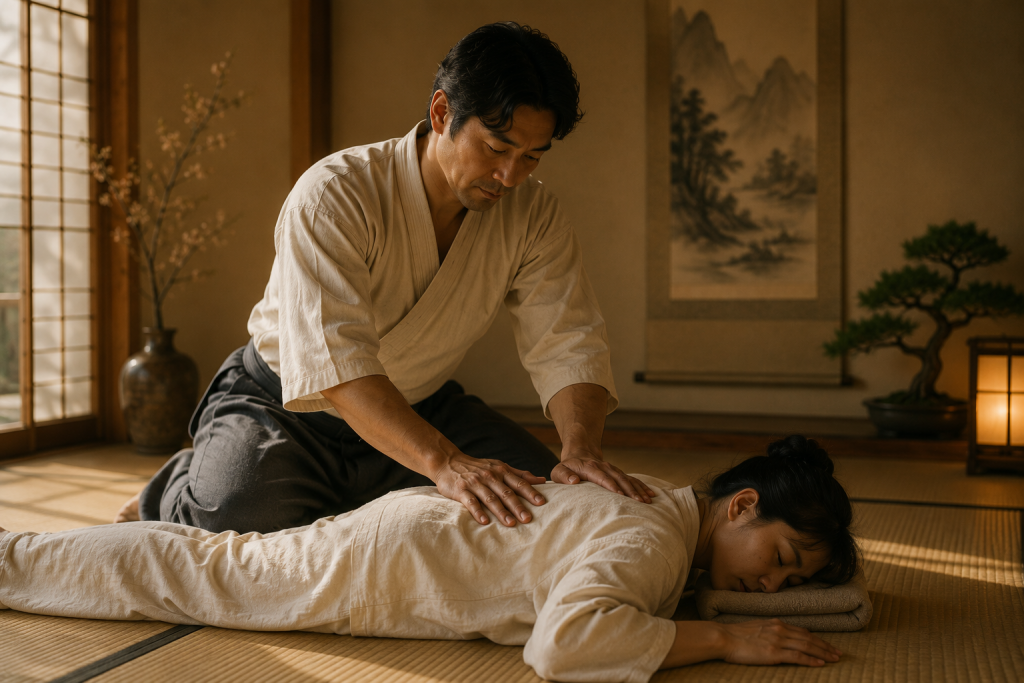
There is another aspect that is rarely discussed: the difficulty of receiving help. For some therapists, it is easier to give than to receive. They are accustomed to being the ones who observe, analyze, and treat. When they lie down on the therapy mat, the roles are reversed, and this may be more difficult than it seems. Perhaps because the therapist is used to being constantly “switched on,” attentive to everything happening around them. Allowing oneself to trust someone else’s hands, to receive without trying to control, and to truly relax are things that sometimes have to be learned.
Beyond all these psychological explanations, there is a very simple reality. In manual therapy, the therapist is the primary working instrument. Their posture, mobility, physical endurance, ability to concentrate, and overall condition directly influence the quality of their work. When these begin to deteriorate, neither experience nor accumulated knowledge can fully compensate.
Perhaps the greatest paradox is that many therapists recommend to their patients every day exactly what they themselves keep postponing: rest, movement, prevention, rehabilitation, and taking care of one’s own body. Perhaps, then, the problem is not always a lack of time. Perhaps it is the place we occupy on our own list of priorities.
Perhaps one of the most valuable questions a therapist can ask themselves is this: If I were my own patient, would I be satisfied with the way I take care of myself?
An honest answer to that question sometimes says more than any analysis ever could. And if the answer is “no,” perhaps it is time to schedule ourselves in the very same agenda where we schedule everyone else.