About experience, tactile memory, and the moment when the hands perceive before the mind
There is a stage in the evolution of many Yumeiho practitioners that I have observed over the years, both in myself and in many colleagues and students. There is no precise moment when it appears, nor a specific number of treatments after which it can be guaranteed. Sometimes it happens after a few years, sometimes much later. Still, I believe that most people who practice long enough will experience it sooner or later.
At the beginning, therapy is guided almost entirely by the conscious mind. We think about the sequence of techniques, positioning, indications and contraindications, and what we are going to do next. Every step requires attention and control. Over time, however, as experience accumulates, a subtle change takes place. Techniques are no longer merely performed; they become part of us. The body begins to move naturally, without every detail being consciously analyzed.
That is when we start noticing something interesting. We enter a session with a specific plan, yet our hands sometimes seem to have a different opinion. We intend to continue in a certain direction, but feel the need to stay a little longer in a particular area. We prepare to move on to the next technique, yet something makes us return to a structure we thought we had already addressed. This is neither a lack of planning nor uncertainty. The contact with the beneficiary’s body simply provides information that we have not yet put into words.
Very often, the explanation comes later. After a few seconds or a few minutes, we realize that there was greater tension in that area, a restriction in mobility, a protective reaction, or an asymmetry that we had not initially noticed. The nervous system perceived the information before the conscious mind turned it into a logical conclusion.
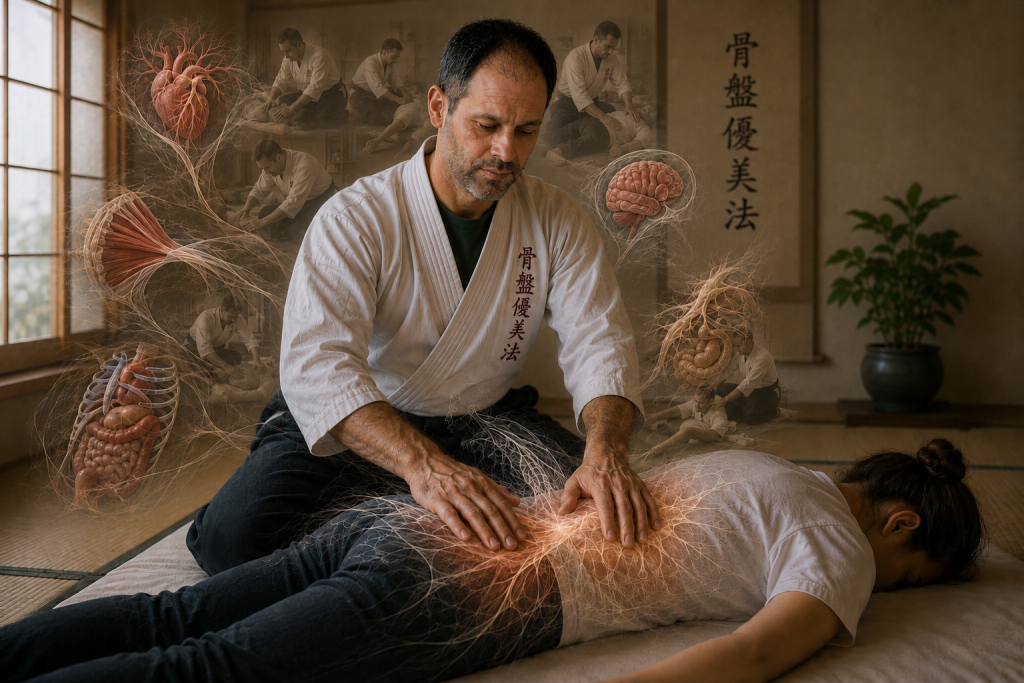
In reality, the hands are not making the decisions. They are the expression of thousands of hours of practice, hundreds or even thousands of beneficiaries encountered, and an enormous amount of tactile information recorded by the nervous system over the years. Every treatment leaves traces within that system. The brain learns to recognize patterns of tension, mobility, resistance, and tissue response much faster than it can explain them verbally. That is why there are moments when it feels as though the hands have moved ahead of thought.
During courses, especially when working with advanced practitioners, I often say:
“Let the hands work, not the mind!”
I do not say this because the mind is unimportant. Quite the opposite. Without knowledge, understanding of techniques, and professional judgment, quality therapy cannot exist. Yet I often observe that after a certain stage, the mind begins trying to control too much. It analyzes every movement, constantly checks whether everything is being performed perfectly, and attempts to direct every step of the treatment. At the same time, accumulated experience is already transmitting valuable information through what we feel beneath our fingertips.
I have noticed that the most fluid treatments occur when the therapist lets go, even briefly, of the need to control every detail and begins paying attention to the information received through touch. At that moment, movements become more natural, transitions smoother, and the choice of techniques seems to organize itself. Not because the therapist is working randomly, but because years of accumulated experience begin actively participating in the process.
This phenomenon is not unique to manual therapy. An experienced musician knows that an instrument is out of tune before being able to explain exactly which note is wrong. An experienced mechanic senses that an engine is not functioning properly before identifying the precise cause. A skilled chess player recognizes a dangerous position before being able to describe the entire sequence of moves that will follow. In all these situations, experience is working quietly in the background.
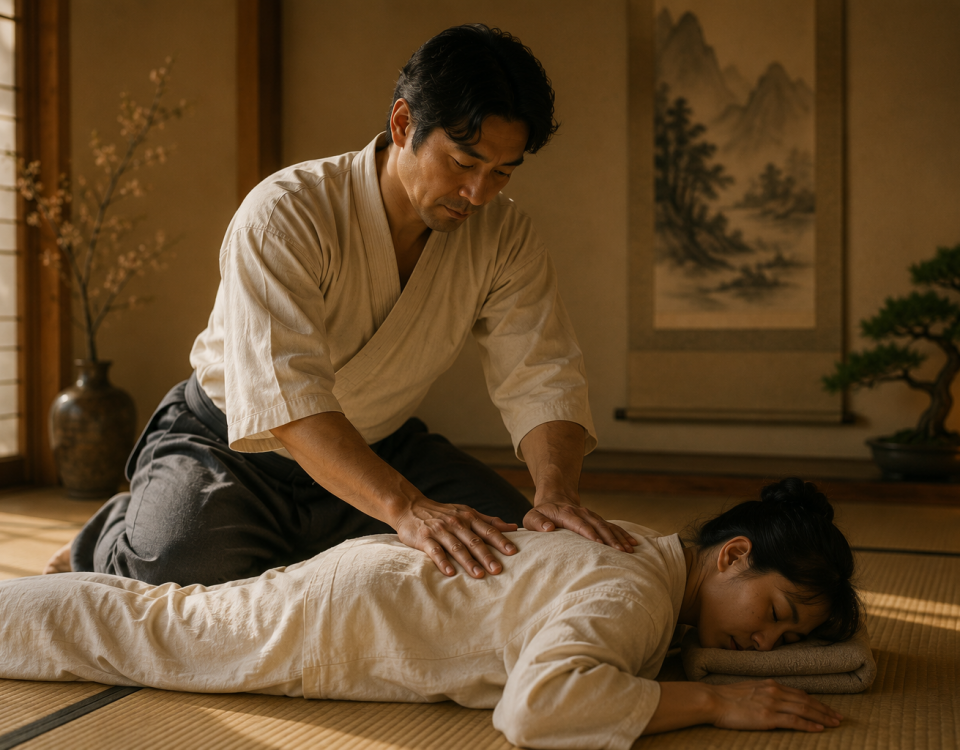
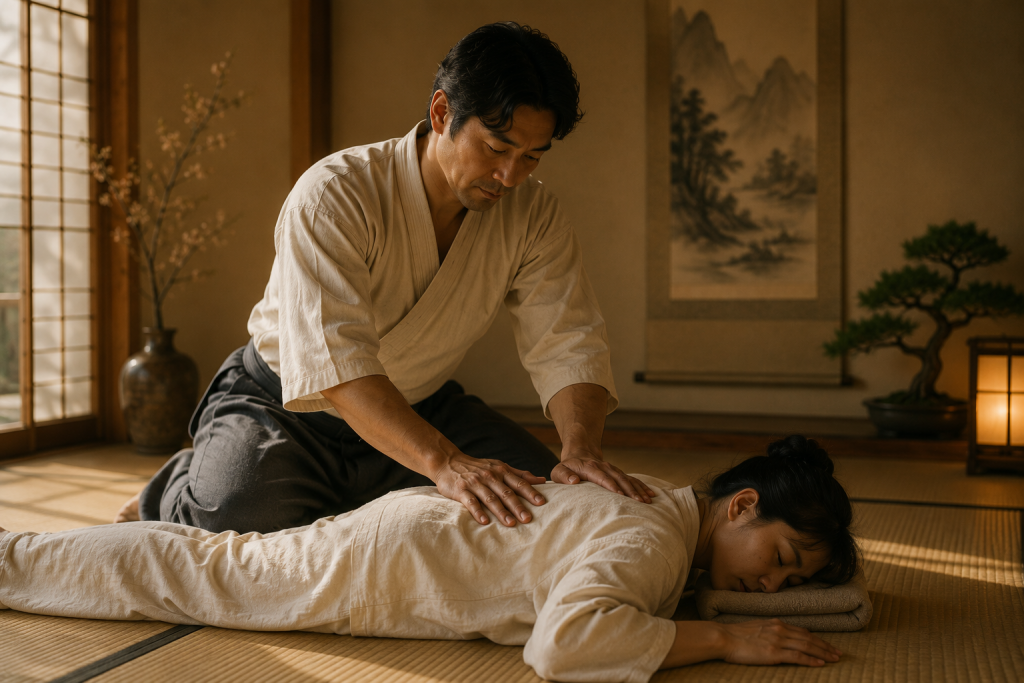
In Yumeiho, this process is encouraged by constant contact with the beneficiary’s body. During a single treatment, the hands receive an extraordinary amount of information. Tissue texture, muscle tone, joint mobility, involuntary reactions, and the changes that occur from one technique to another are continuously analyzed by the nervous system. After years of practice, a genuine tactile memory develops. It does not function through words or theories, but through the continuous comparison between what we feel now and everything we have felt before.
Perhaps this is where the true value of a therapist’s hands begins to reveal itself. The eye observes posture, asymmetries, and movement patterns. The hand, however, can perceive things that vision does not always capture. An area with altered tone, a deep contracture, unusual tissue resistance, or a subtle mobility restriction is often discovered through touch before it is identified through conscious analysis.
One comparison I particularly like is that of a metal detector. A metal detector does not know what it is searching for. It simply reacts to differences perceived by its sensors. In a similar way, after years of practice, a therapist’s hands begin reacting to subtle differences within tissues. This is not a mysterious phenomenon, but rather the nervous system’s ability to recognize patterns built through thousands of hours of direct contact with the human body.
We often say that “the hands can feel.” Scientifically speaking, information is processed by the brain. From a practical perspective, however, the expression describes our clinical experience very accurately. There are forms of information that we discover through touch and that we would never have noticed by observation alone.
A phrase that has stayed with me is:
“The eye does not see, but the palm feels the suffering fiber.”
Beyond its poetic nature, it captures a reality familiar to most experienced practitioners. Over time, you learn that your eyes show you the beneficiary’s body, while your hands tell you what is happening within it. The eye sees form, posture, and movement. The palm perceives tension, resistance, and tissue response.
Perhaps one of the most important transformations we undergo as therapists occurs when accumulated experience begins expressing itself naturally through our hands. At first, we work mainly with what we know. Later, we begin working with what we feel. After enough practice, the two are no longer separate. Knowledge, experience, and tactile perception start functioning together, and therapy acquires a fluidity that cannot be learned from books nor fully explained with words. It can only be lived and developed, treatment after treatment, year after year.
And when a conflict arises between what we planned and what we feel beneath our fingertips, it is worth pausing for a moment and listening. The hands are not always right. But neither does the mind always have all the answers. Sometimes, the most valuable information emerges precisely from the dialogue between the two.
After enough years of practice, we discover that one of the greatest teachers we can have is the memory built into our own hands. Perhaps that is when we truly understand what is meant by the expression:
“The hands are smarter than we are.”
Not because they think, but because they carry within them an experience that the mind cannot always express in words.