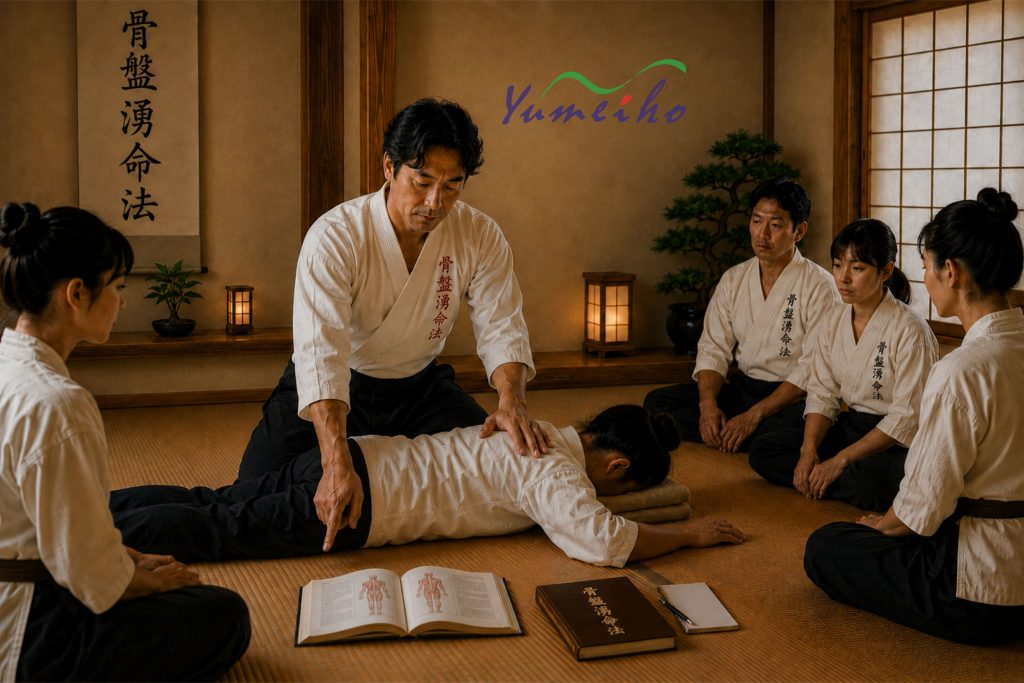
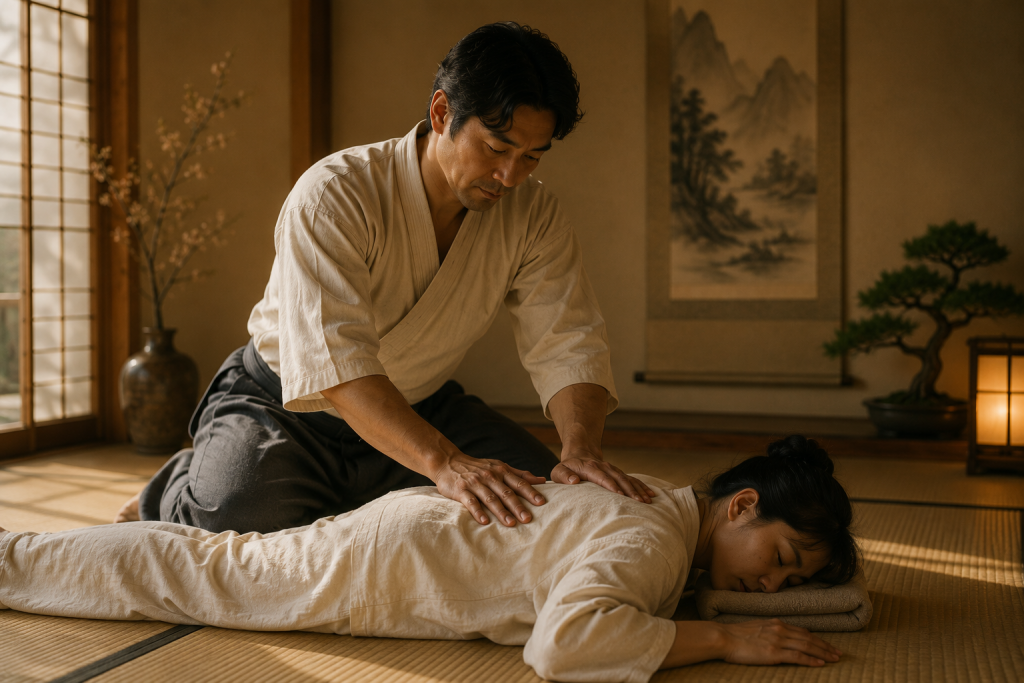
After more than 18 years of Yumeiho practice, one simple thing has become clear to me: there is no such thing as a “standard patient.” There are people. With different histories, different ways of understanding pain, and sometimes very different expectations of what therapy means.
According to the dictionary, a patient is a sick person undergoing medical treatment. At the same time, in today’s healthcare language, a patient is considered any person who uses healthcare services, whether they are ill or not.
The reality is that, in the treatment room, it is not only sick people who come in. People come in looking for solutions, balance, prevention, or simply answers.
That is why the terms patient, beneficiary, or client can all be appropriate, depending on the situation. The patient comes with a clear problem, the beneficiary may come even without pain, for maintenance or prevention, while the client highlights the professional relationship and the conscious choice to use a service.
In Yumeiho, we do not work only with a condition, but with the person as a whole.
Most people come to the clinic because of pain, whether in the lumbar or cervical area, the shoulders or knees, or because of a general state of tension and stiffness. Many describe the feeling of a “heavy” body, tired or unbalanced.
Others come for recovery, after accidents or long periods of inactivity.
There are also those who come preventively, for maintenance, or out of curiosity, following recommendations from others.
And there are quite a few who come expecting a quick fix, influenced by the idea that the problem should disappear fast.
Over time, patterns begin to appear. These are not labels, but they help with understanding.
There is the patient who truly wants to get better and understands that recovery is a process.
There is the informed patient, who can be helpful or, if the information is incorrect, can complicate things, and there is also the patient who works in the healthcare field, usually more attentive to details and more inclined toward comparisons.
There is also the patient who tests you, especially if they have had negative experiences in the past.
There are patients who do not say everything or who forget. Not necessarily out of bad intention, but because they do not know what is important or cannot connect the symptoms. That is why the way the initial discussion is conducted matters a lot.
There is also the patient who moves from one therapist to another, out of dissatisfaction, lack of patience, or curiosity. This patient already comes with expectations and comparisons.
A common type is the patient who seeks immediate healing. They ask from the beginning how many sessions are needed and lose trust if results do not appear quickly.
At the opposite end is the passive patient, who attends sessions but does not get involved outside the clinic and expects everything to be solved by the therapist.
There is also the anxious patient, attentive to every sensation, and the loyal patient, who returns consistently and understands the process.
A distinct category is the patient who “already knows.” They come with preformed ideas, say what they have and what should be done, request specific techniques, and reduce therapy to simple execution. In reality, without proper evaluation, things can go in the wrong direction. In such situations, the therapist’s role is not to execute on demand, but to assess, filter, and guide.
There is the patient who trusts the therapist and the process. This trust is important, but it must be accompanied by involvement.
In contrast, there is also the patient who does not believe, either in the therapy or in the therapist. Most of the time, this lack of trust comes from previous unsuccessful experiences.
There is also the “brought-in” patient, who does not come on their own initiative, but is pushed by family or circumstances. At first, they are reluctant, but sometimes they become involved over time.
And there is a less common type: the patient who says they want to get better, but in reality does not get involved at all. They do not follow recommendations, do not make changes, and return with the same problems.
In some situations, maintaining the “patient” status may bring secondary benefits, such as attention or care from others, which can unconsciously reinforce this pattern. It is not something openly stated, but it is a pattern that appears. Here, the real challenge is no longer applying the right technique, but understanding the behavior.
After years of practice, it becomes clear that not everyone who enters the clinic is looking for the same thing. Some are looking for real solutions. Others are looking for confirmation. Others are looking for experiences. And some, without realizing it, are looking for attention.
The patient is not just a pain and not just a diagnosis. It is a person, at a certain moment in their life, with their own limits, fears, and expectations.
In Yumeiho, the difference is not made only by technique, but by the ability to understand who you are working with.
Because beyond the body, there is always a story. And very often, there is even a story behind that story. And that is where real therapy truly begins.