In the office, I very often hear the same things: “my neck hurts”, “my shoulders feel like stone”, “my back is always tense”. Most of the time, people blame this on desk posture or fatigue. In reality, in most cases, the main cause is daily stress.
What stress does in the body, concretely
Stress is not just a psychological state. It is a clear biological reaction. When we are under pressure, the body activates the sympathetic nervous system, that “alert mode”. Hormones such as adrenaline and cortisol are released.
This leads to several direct effects:
These reactions are useful in the short term. The problem appears when stress becomes constant.
In the long term, this continuous state of alert begins to affect the function of internal organs, at the digestive, cardiovascular, and pulmonary level. It is not just about muscles and posture, but about how the entire body responds and adapts to constant stress.
Why the cervical area and shoulders are affected first
The cervical area and shoulders are extremely sensitive to stress for two reasons:
The result is a constant muscle contracture, especially in the upper trapezius, suboccipital muscles, and cervical paravertebral muscles.
What happens over time
If this state persists, progressive changes occur:
At the same time, symptoms often appear that can mislead the patient: chest pressure, palpitations, a lump in the throat, difficulty breathing, or abdominal discomfort.
In many cases, these manifestations are related to anxiety and the overactivation of the nervous system, not to an actual organic disease, although they are felt as very real and intense.
According to medical literature, tension-type cervical pain is closely linked to stress and prolonged muscle activity.
The back – the area that compensates
The back, especially the thoracic and lumbar regions, becomes a compensatory area.
When the cervical area is rigid and the shoulders are blocked:
Over time, a chain of imbalance appears:
cervical → shoulders → thorax → lumbar
This is why many patients come with lower back pain, but the real cause starts higher.
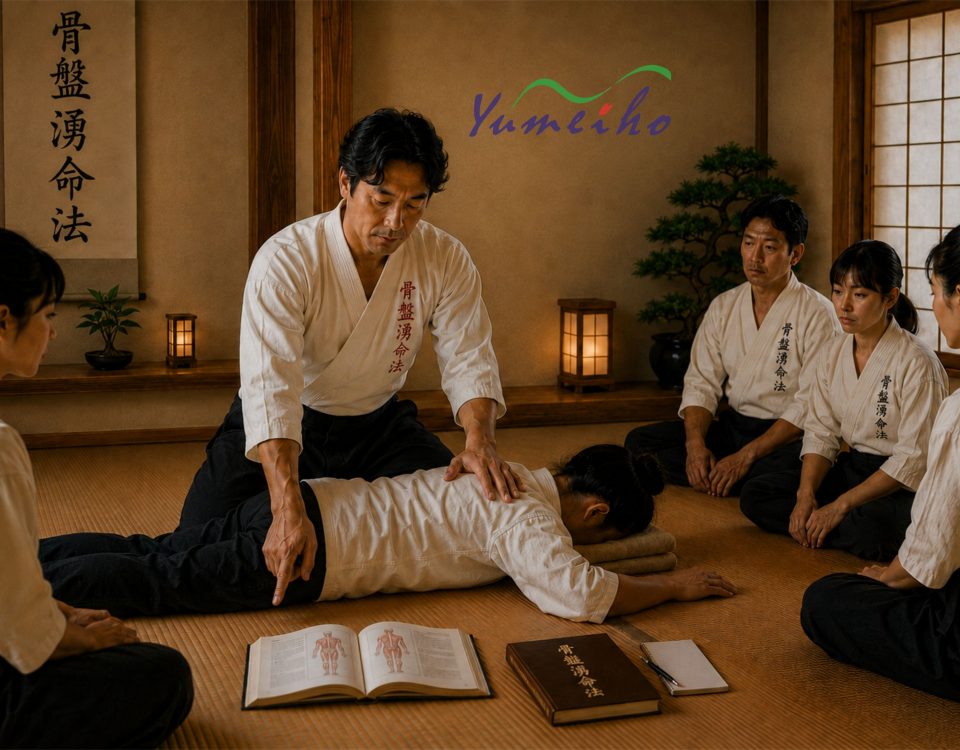
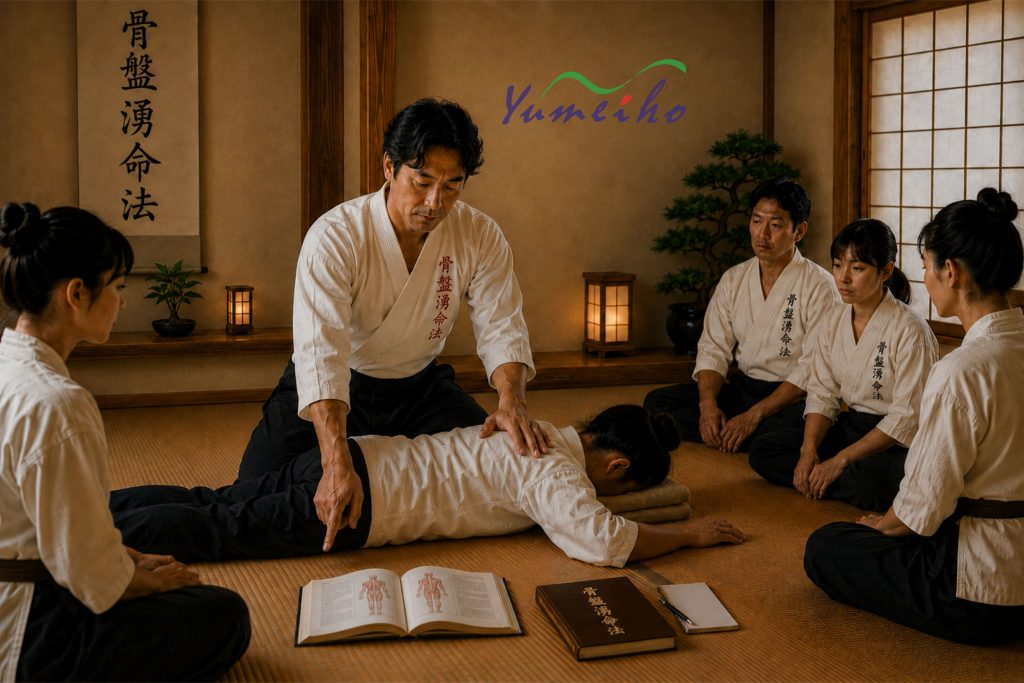
What I observe in Yumeiho practice
From direct experience, in most patients with chronic stress I observe:
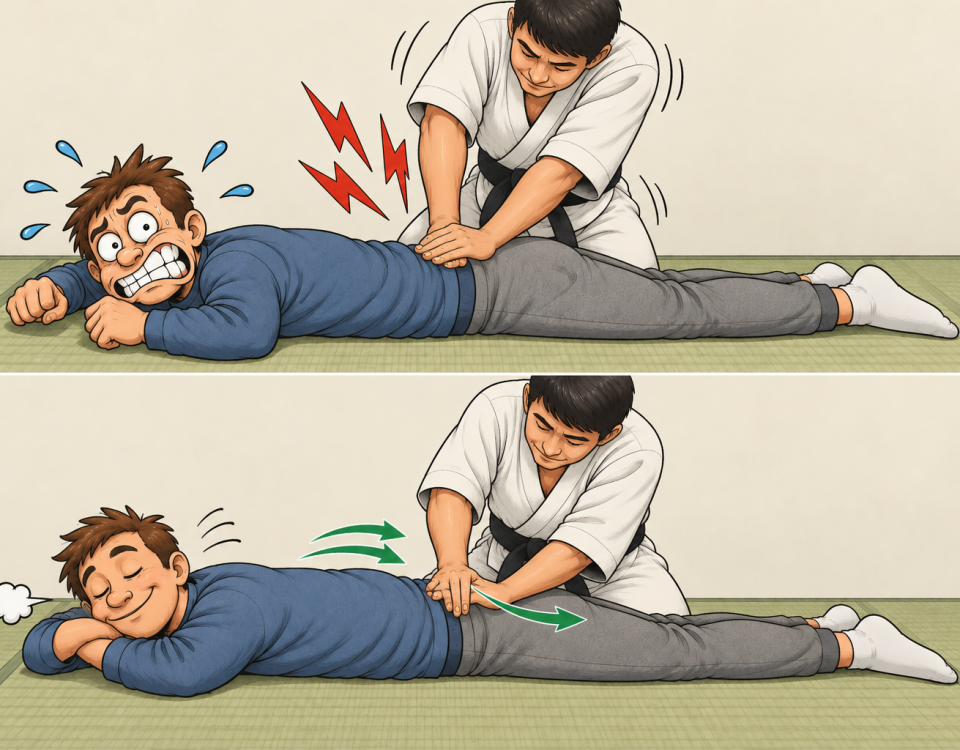
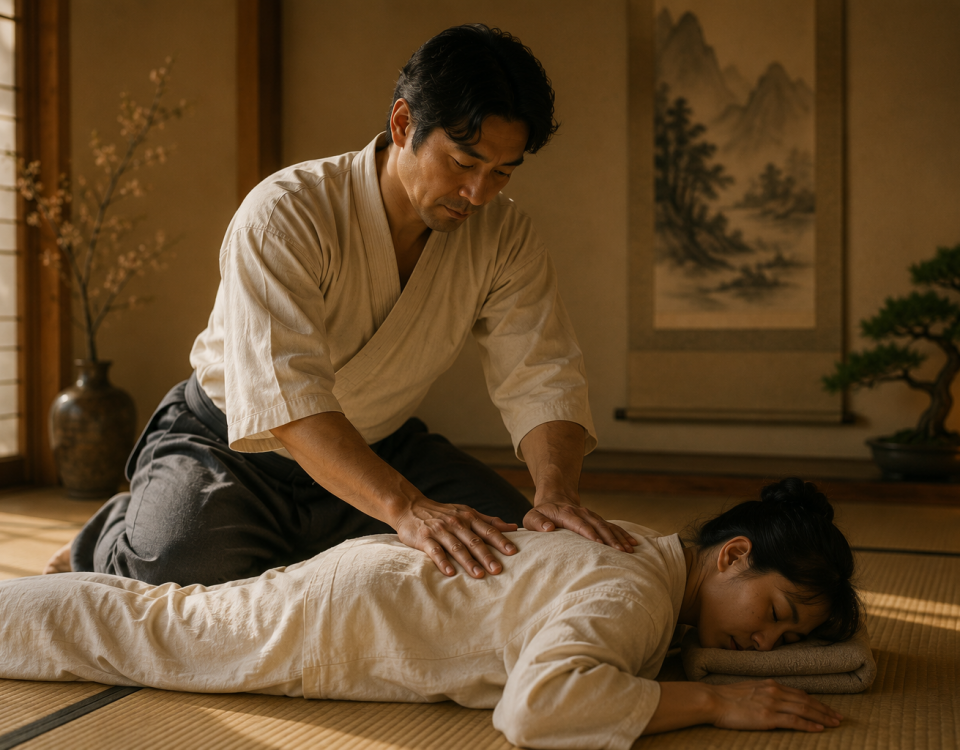
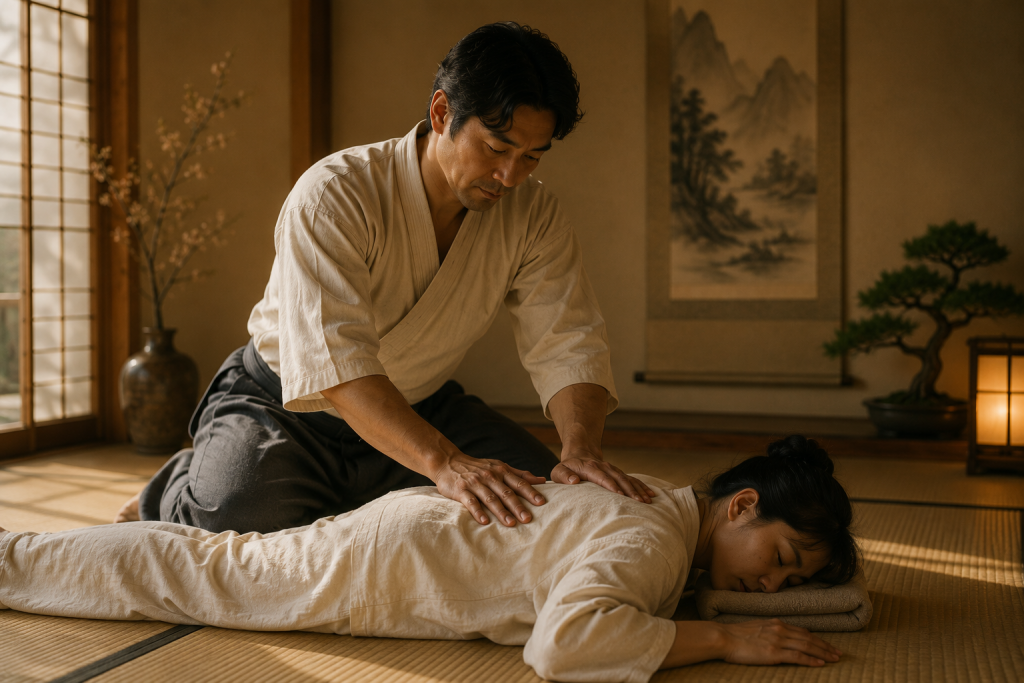
Yumeiho works on these chains. It does not treat only the place of pain, but the relationship between them.
By correcting alignment and relaxing the muscles, the body begins to exit that state of alert.
An important aspect, often ignored
Many people look for a quick solution: one or two sessions, and that’s it.
The problem is that if the stress remains the same, the body returns to the same pattern.
It is a simple mechanism:
Moreover, if this state persists, the body can “learn” this reaction pattern and reproduce it automatically, even in the absence of a real threat. This is how recurrent episodes of anxiety, somatization, and physical symptoms without a clear organic cause appear.
That is why therapy works best when combined with:
Conclusion
Cervical pain, shoulder tension, and back stiffness are not random. In most cases, they are the expression of accumulated stress that the body carries silently.
The body does not separate the psychological from the physical. Everything works together.
As a therapist, my role is not just to remove pain, but to help the patient understand why it appeared. Because without this understanding, the pain returns.
Behind many seemingly simple pains, there is a clear cause: daily stress, repeated and ignored.