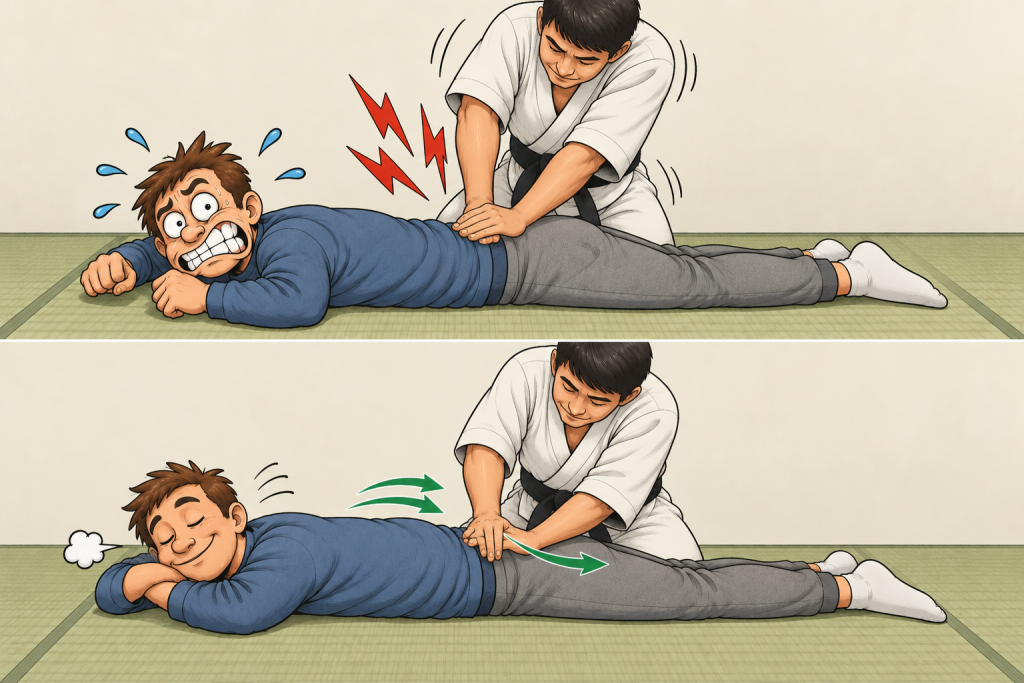
Almost every therapist has heard, at some point, a comparison along the lines of: “I’ve been to someone else who practices the same method, but the experience was completely different.”
At first glance, the statement may seem strange. If the method is the same, if the techniques are the same, and if the training is similar, where do the differences come from?
Perhaps the answer lies not only in the technique, but also in the person applying it.
In manual therapy, authenticity takes on a particular importance. Here, you are not working only with techniques. You are working directly with another human being. And people feel. Sometimes even more than they can explain, more than they can put into words and, at times, more than science can demonstrate.
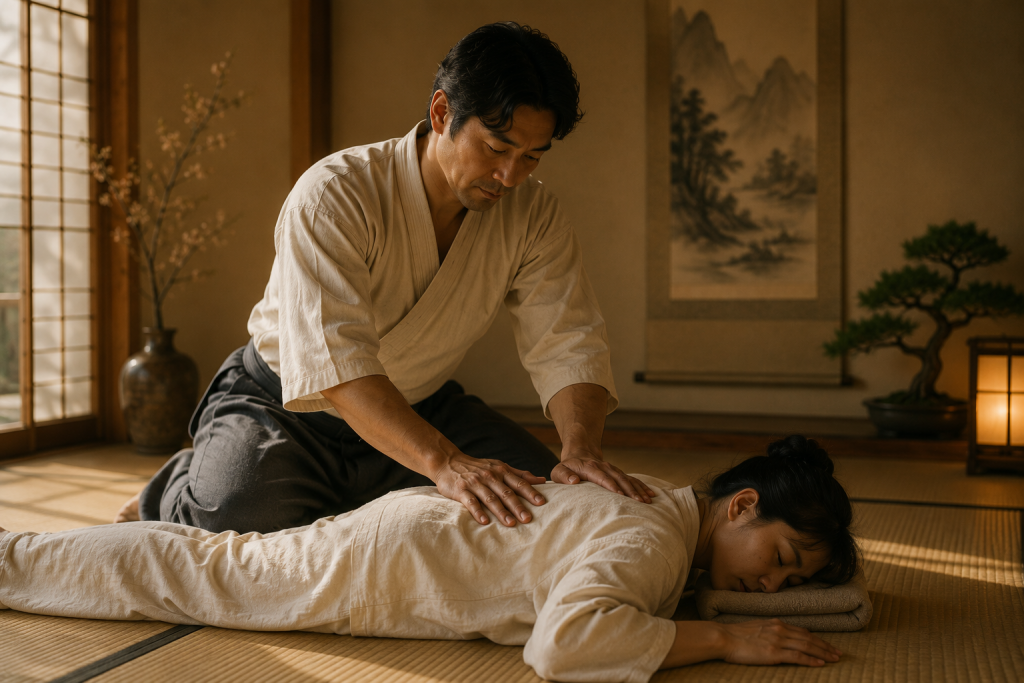
A patient may not understand the biomechanics of a technique, but they can quickly sense whether the therapist is truly present, whether they are rushed, whether they are playing a role, whether they are working mechanically, whether they trust what they are doing, or whether their touch conveys confidence or uncertainty. That is why, in manual therapy, authenticity is not merely a moral quality. It becomes part of the therapeutic act itself.
This is where something fascinating happens. Two therapists may learn exactly the same method, attend the same course, repeat the same movements, and receive the same diploma. And yet the patient may sometimes say: “With one of them, I felt something different.”
Why? Because manual therapy is not merely biomechanical execution. It is also a human exchange. The way the therapist breathes, positions themselves, touches, waits, listens, adjusts pressure, feels tissue resistance, and finds a rhythm with the patient changes the overall experience. The technique may be identical. The presence is not.
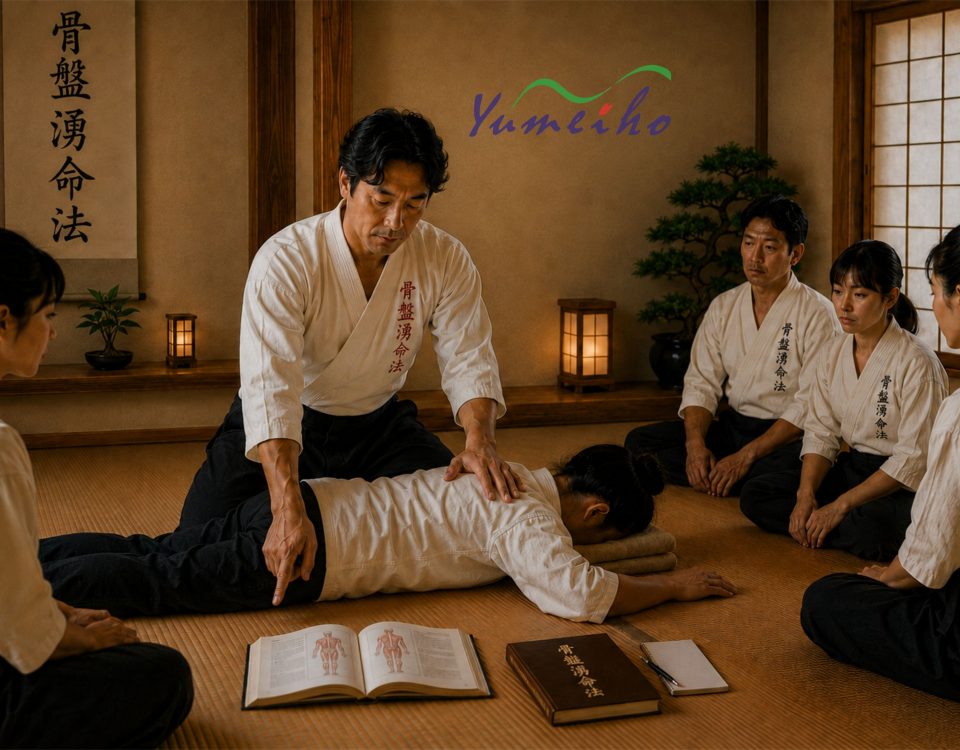
In every therapeutic school, a tendency to imitate inevitably appears. At the beginning, this is normal. The student copies the instructor: posture, tone of voice, gestures, expressions, and way of working. It is a natural stage. The problem arises when the therapist remains stuck there and their entire professional identity becomes a collection of imitations.
Some even begin to copy the teacher’s personality: the way they speak, the way they look at the patient, their pauses, jokes, or expressions of authority. But authenticity cannot be borrowed. The patient does not come to receive a copy of someone else. They come to meet the person in front of them.
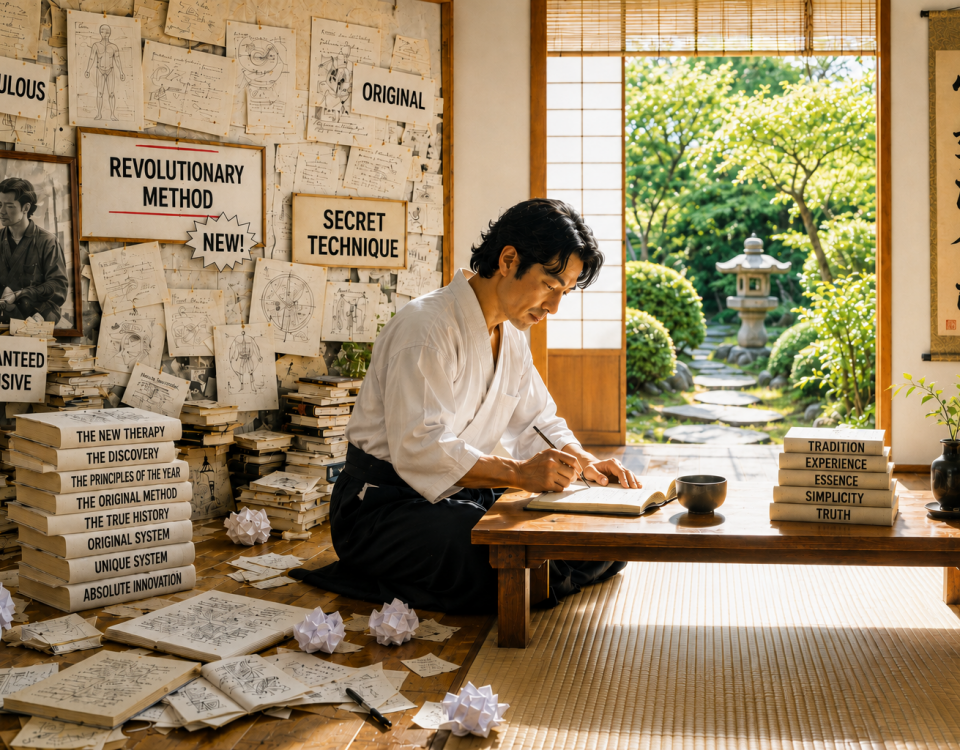
At the opposite extreme is the therapist who desperately tries to be different. They constantly invent spectacular theories, promise impossible results, create an aura of mystery, use complicated language, and turn everything into a performance. But forced originality is quickly felt. In manual therapy, the patient’s body becomes a kind of very honest detector. It responds not only to technique, but also to the therapist’s tension, ego, or need for validation.
Very often, the most valuable therapists are not the most theatrical, but the most present.
At the beginning of the journey, the therapist is mainly concerned with questions such as: “Am I performing the technique correctly?”, “Are my hands positioned correctly?”, “Am I following the right sequence?”, “Am I applying enough force?” Later, another level of understanding appears: “What is the patient’s body communicating?”, “When should I persist?”, “When should I stop?”, “When should the technique be adapted?”, “When does the patient need pressure, and when do they need a sense of safety?”
And after years of practice, perhaps the most important transformation occurs: the therapist begins not merely to apply techniques, but to work with the person in front of them. That is where professional authenticity begins.
There is a subtle difference between the therapist who wants to help and the therapist who constantly wants to prove how much they know. The patient can feel the difference. An insecure therapist may sometimes resort to more pressure, more explanations, more promises, and more spectacle. A mature therapist can work simply, clearly, and without excess. Not because they know less, but because they are no longer driven by a constant need for validation.
Almost all therapeutic schools contain elements that have existed for hundreds or even thousands of years: pressure, traction, mobilization, stretching, rotation, breathing, touch, relaxation, and positioning. The human body has not fundamentally changed. And yet every generation feels the need to rename, reorganize, or reformulate what already exists.
That does not automatically make it false. Sometimes it means evolution. Sometimes marketing. Sometimes simply another perspective on the same phenomenon. But a mature therapist understands something important: it is not the name that makes the difference, but the depth of understanding and the quality of application.
The true uniqueness of a therapist does not necessarily come from inventing a new method. It comes from the way they understand the person and their suffering, from how they use their experience, manage their ego, remain present, adapt their technique, build trust, and sense the patient’s limits.
After many years of practice, two therapists no longer resemble each other, even if they use the same method. Every patient leaves a mark on the therapist as well. Changes them a little. Refines them. Makes them more attentive, deeper, more patient, more precise and, perhaps, more human.
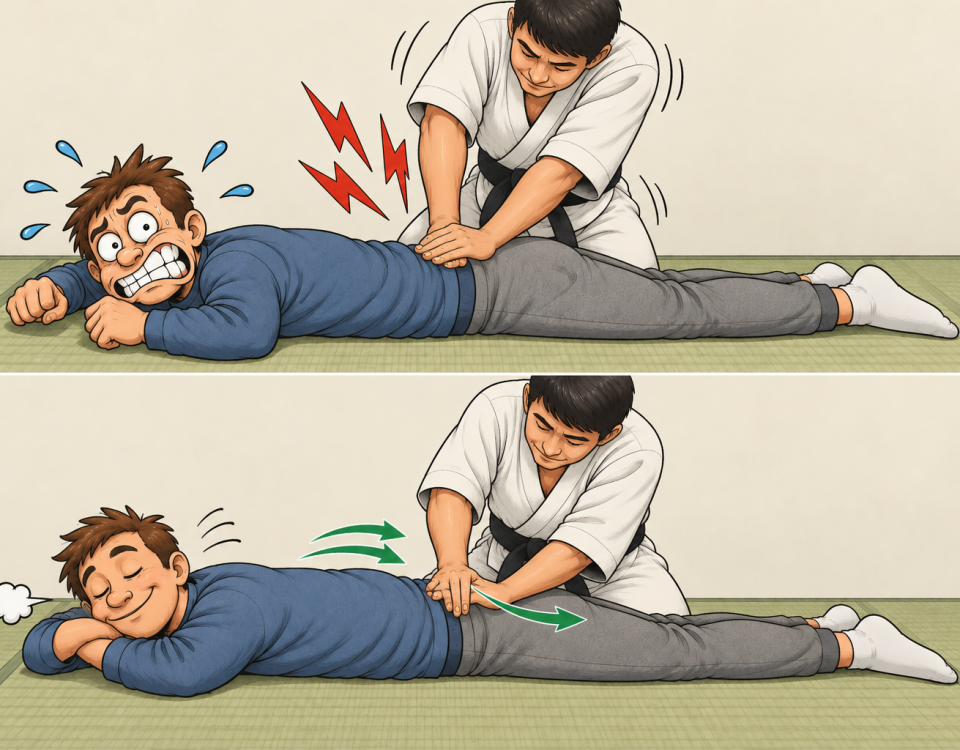
In manual therapy, touch conveys much more than mechanical pressure. It can convey safety, haste, fear, aggression, patience, ego, calm, attention, or presence. That is why two therapists may apparently perform the same technique, while the patient experiences two completely different things. Because a person does not perceive only the movement. They also perceive the person behind the movement.
In many situations, the patient responds not only to a technique, but also to the level of trust they feel within the therapeutic relationship. The body relaxes more easily when it perceives safety. Resistance decreases when the person in front of them inspires calm, consistency, and trust. For this reason, authenticity can also indirectly influence the way the patient experiences therapy.
The authenticity of a manual therapist does not mean being completely different from everyone else, nor does it mean constantly inventing new things. It means that, after learning from others, after copying, practising, making mistakes, and evolving, the therapist gradually begins to become themselves in what they do.
Perhaps this is one of the most beautiful transformations in manual therapy: the moment when the technique no longer seems to be applied from the outside, but flows naturally through the therapist.
At that point, the therapist no longer tries to resemble their teacher, nor to prove that they are different from everyone else. They no longer constantly seek validation, nor do they feel the need to impress. They simply work in their own way.
Perhaps this is where true professional authenticity begins.
And the patient feels it. Often without being able to explain exactly why.